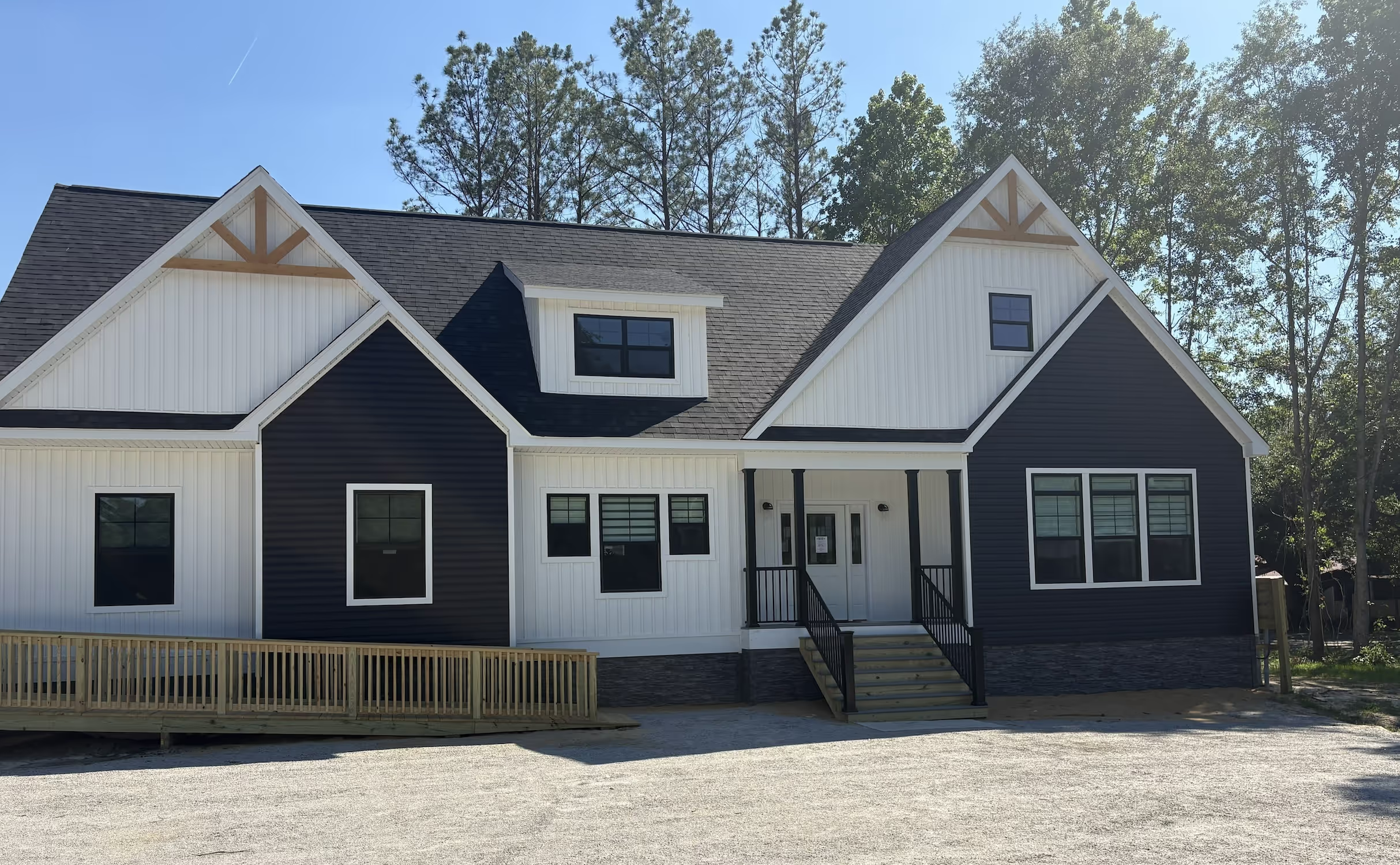
Whether you're new to the concept or looking for detailed insights, you'll find answers to common queries about modular homes here. We aim to provide comprehensive information to help you make informed decisions about modular homes. If you have additional questions, feel free to reach out—we're here to assist you every step of the way.
The Carolina Country Homes Land Assistance Program is designed to help homebuyers who want to purchase land and build a custom home—but need guidance through the complex process. From zoning and permits to utility setup and cost estimates, our program streamlines your journey to homeownership.
When buying a home, there are three primary options:
While the third option is appealing, it can be daunting. That’s where our Land Assistance Program comes in.
Preliminary Lot Planning
Permits & Utilities
Land Development Cost Estimates
Finding the Right Property
Off-Frame Modular homes are factory-built homes constructed in sections, or modules built to the same IRC building code and standards, using the same materials, as a site-built home. They are then transported to the building site, lifted off the transport frames, and assembled on a permanent foundation.
Manufactured homes, formerly known as mobile homes, are also factory built but are built to the HUD building code (a government developed code aimed at providing affordable housing). They are transported to the site on their own chassis/frames, which remain under the house, and a “skirt” is erected around the chassis/frames.
On-Frame Modular Homes are a combination of Off-Frame and Manufactured in that they are built to the IRC building code but the frames are left under the house and a “skirt” is erected around them.
Prefab, or prefabricated, homes is a broad term that encompasses any home whose components are manufactured in a factory and then transported to the site for assembly. This includes both modular and manufactured homes, as well as other types like panelized and pre-cut homes.

Before purchasing land or moving forward with construction, it’s crucial to evaluate:
We help research these factors and connect you with professionals when needed. Check out our Land Assistant Program to learn more.
We're a complete one-stop-shop for modular homes. Beginning with a thorough analysis of your lot, our experienced team will guide you through funding, permitting, budgeting and the final construction. We’ll keep you informed throughout the whole process, addressing any concerns and making sure everything is in place.
Financing a modular home is similar to financing a traditional site-built home. The process generally involves the following steps: pre-approval, loan application, appraisal and site preparation, construction loan.
Yes. Over the years, we have established fantastic relationships with some great lenders that know our process. Although we don't require you to use them, we find that about 80% of our customers do.
Sure! If you need help financing your project, our team can connect you with lenders and help you understand all of your options. We will work with most lenders but find it works best if you use one of our core group of preferred lenders—who can provide FHA, USDA, VA, Construction or Conventional financing. Typically lenders will give you a “soft” approval in a few days and will require a minimum credit score of 580+.
For larger jobs with land purchases, garages, loft build outs or raised foundations we would help you get a construction loan to fund the construction phase of the project.
Unlike typical loans, certain types of construction loan give you the benefit of a single upfront close, which locks in your monthly payment before construction begins. Either way, if you already own your land free and clear you will likely not have to put down any upfront deposit.
There are two different levels of customization available:
In terms of personalization, you’ll always be given options on colors, cabinets, countertops, sinks, tubs, showers, doors, windows etc.
Value Homes: Value homes were created in response to rising interest rates, the rising cost of basic materials and labor. By limiting options for both customization and personalization, manufacturers can provide customers with a more affordable product.
Custom Homes: Most homes in this category can be built by multiple manufactures with multiple customizable options. Often this includes changes to floor plans and other modifications of the home. Many choices can be made with these homes, such as color, cabinets, countertops, flooring, and a lot more! There is an EXTRAORDINARY amount of things that you can do with these homes to make them yours.
A Value Home offers several benefits, primarily centered around affordability and efficiency. These modular homes are budget-friendly, making them an excellent choice for first-time homebuyers or those looking to maximize their investment. They are constructed quickly and with consistent quality in a controlled factory environment, ensuring durability and reducing maintenance costs.
Carolina Country Homes warrants workmanship (labor and parts) on all components of the project for a period of one year and provides a 3rd party 10 year warranty on all structural components. In addition, the manufacturers of the appliances, floor coverings and shingles provide additional warranties.
Modular homes offer numerous advantages over traditional site-built homes, including:
Every manufacturer offers personalization in terms of colors, cabinets, countertops, sinks, tubs, showers, doors and windows. Value Homes are more standardized, meaning they have fewer personalization options.
Fundamentally and structurally, modular homes are built well. Because they have more lumber than a typical site-built house, they are actually much stronger.
It’s impossible to give an exact timeline due to specific circumstances such as funding, local permitting processes, sewage/septic, weather conditions and complexity of the build. However, modular homes offer a faster and more predictable construction process compared to traditional site-built homes.
Typically, we can get the house from the manufacturer in 10-12 weeks. Some of our customers have been able to complete the process and move into their homes in as little as 3-4 months, but again, there are many factors that influence the timeline.
While you don't necessarily need to have the land purchased before starting the process of buying a modular home, having the land secured beforehand simplifies the process and ensures a smoother transition from planning to construction.
Customization refers to changes made to the structural design of the home. These changes can be pretty significant, for example different floor plans and Cape options. Each manufacturer has many floor plans to choose from, but because we sell homes built by multiple manufacturers, Carolina Country Homes has the widest selection to choose from.
Personalization is offered by all manufacturers and can be thought of in terms of colors, cabinets, countertops, sinks, tubs, showers, doors and windows. Value Homes are more standardized, meaning they have fewer personalization options.
We understand that you may have specific questions that could affect your building process. We're here to be a resource for you every step of the way. Please feel free to contact us at any time with your inquiries, and our knowledgeable team will gladly assist you and help navigate through any concerns you may have.