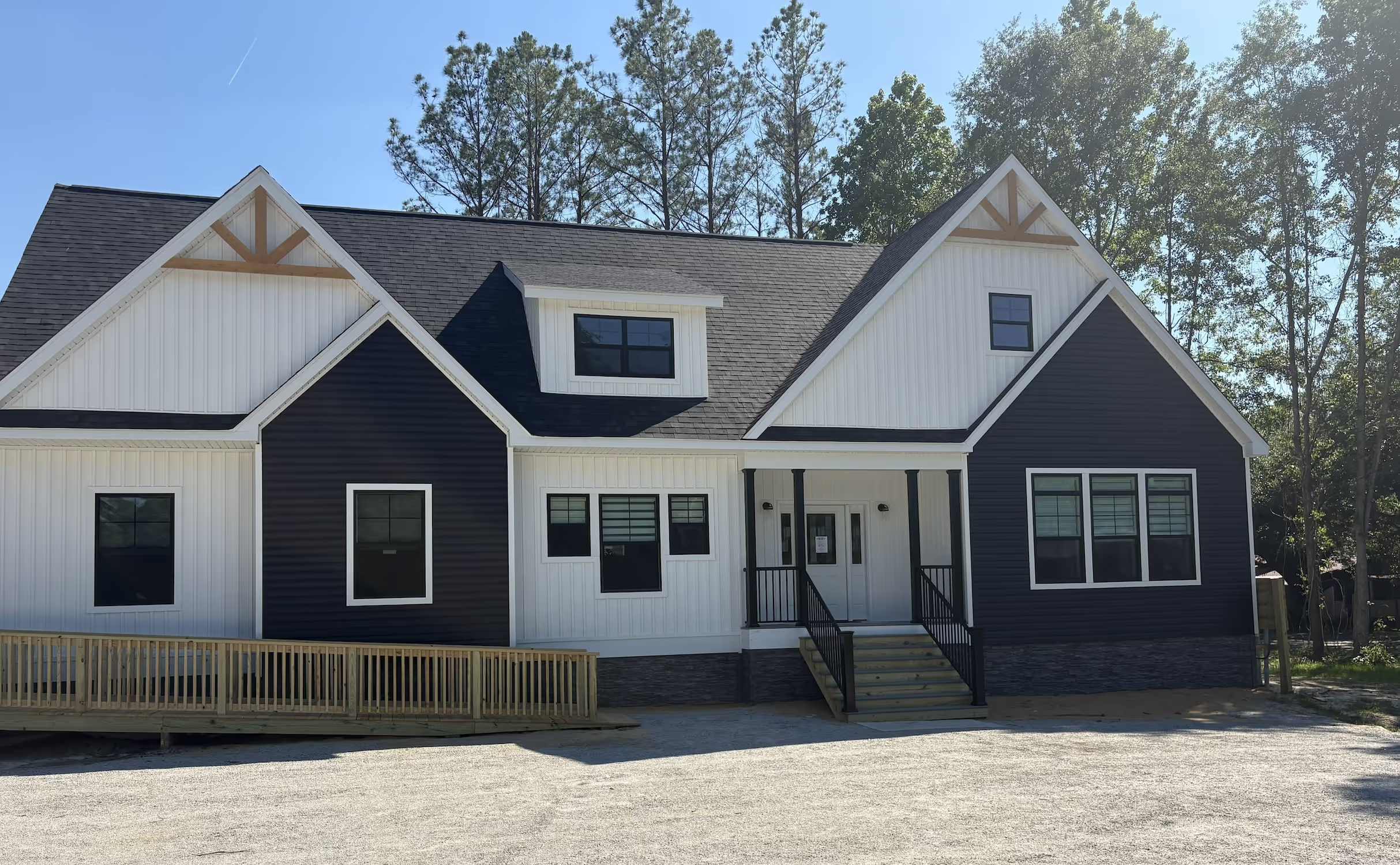
New Yemassee, SC display center now open!
Learn More
May 12, 2026
These terms get used interchangeably in the Carolinas, but they mean very different things when it comes to quality, financing, and long-term value.
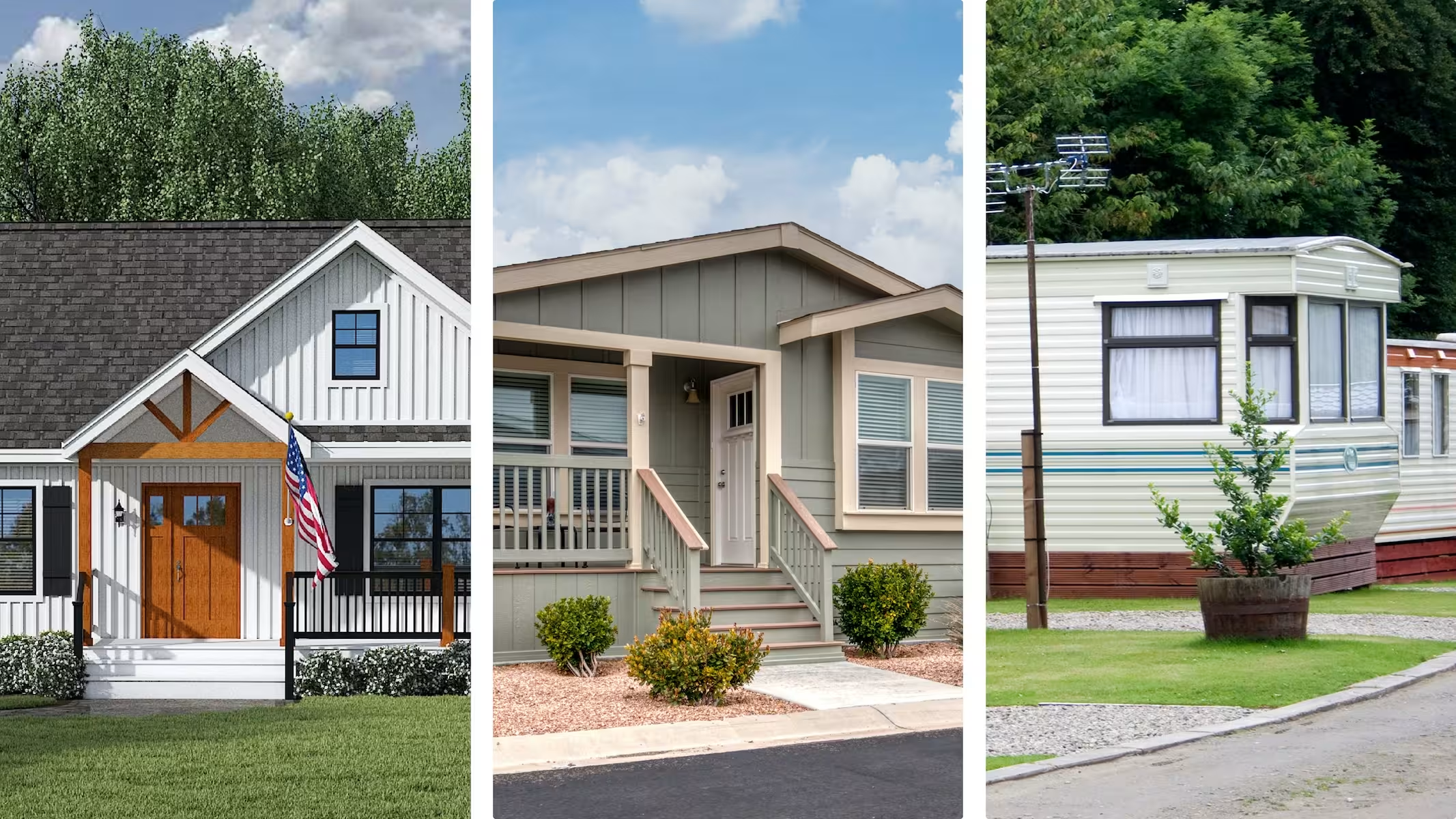
Walk into most home-buying conversations in rural South Carolina and you'll hear "modular," "manufactured," and "mobile home" used as if they're the same thing. They're not, and the distinction matters a lot when it comes to quality, financing, property value, and what you can actually do with your land.
This guide clears it up.
A modular home is built in sections inside a climate-controlled factory, then transported to your site and crane set onto a permanent foundation. Crucially, modular homes are built to the same state and local building codes as a conventionally site-built home. They go through the same inspections and must meet the same standards.
Because they're built in a factory, modular homes benefit from consistent quality control, faster build times, and the cost efficiencies of factory production. But they are not a compromise on quality. A well-built modular home is structurally stronger than a stick-built home — especially as it must be capable of being picked up by a crane — and in some respects, the precision of factory construction makes it a tighter build than what you'd get from outdoor construction.
Modular homes are classified as real property, which means they appreciate in value like a conventional home and can be financed through standard mortgage programs, including FHA, VA, and USDA loans.
At Carolina Country Homes, every home we sell is modular. We work with four manufacturers (R-Anell, Champion, Schult, and Nationwide) and offer dozens of customizable floor plans. When you buy from us, you're getting a home that will be inspected, permitted, and built to the same codes as any other home in your county.
A manufactured home is also factory-built, but it's built to federal codes set by the U.S. Department of Housing and Urban Development (HUD) rather than to state and local building codes. This federal standard, established in 1976, is often referred to as the HUD code.
Manufactured homes can be placed on a permanent foundation or remain on a steel chassis. When they're on a chassis, they're typically classified as personal property rather than real property, which affects both financing options and long-term value. They generally don't appreciate the way a modular or site-built home does.
The customization options on manufactured homes are more limited, and financing can be trickier. Some loan programs that apply to modular homes don't extend to manufactured homes, which matters when you're talking to lenders.
"Mobile home" is technically a term for factory-built homes constructed before June 15, 1976, when the HUD code took effect. After that date, they are more commonly referred to as "manufactured homes."
In practice, people in the Carolinas still use "mobile home" as a catch-all term for any factory-built home on a chassis, regardless of age. It's worth noting that this usage isn't technically accurate and, more importantly, can cause confusion when you're trying to understand what you're actually buying.
Older mobile homes are generally not eligible for conventional financing, don't appreciate in value, and can be difficult to insure or place on certain types of land.
Part of the reason these terms get muddled is that some large national companies sell both manufactured and modular homes under the same brand umbrella. If you've visited a Clayton dealer, for instance, you may have seen both on the same lot. That can make it genuinely hard to know what you're looking at without asking directly.
At Carolina Country Homes, we sell only modular homes. We've made a deliberate decision not to carry manufactured homes because we believe modular construction delivers better long-term value for our customers, both in the home itself and in the financing options available to them.
If you're purchasing land in rural South Carolina or North Carolina and planning to build, the type of home you choose has downstream effects on nearly everything: your loan options, your appraisal, your property taxes, and the resale value of your investment years down the road.
A modular home on a permanent foundation is treated the same as a site-built home by lenders, appraisers, and county assessors. That's a meaningful advantage and one reason we're consistently transparent with buyers about the difference.
If you have questions about which type of home fits your land, budget, and long-term goals, our sales team is happy to walk you through it without any pressure.
Building a modular home with Carolina Country Homes is an exciting and rewarding experience, from the initial display center visit to the day you move into your beautifully crafted new home. Reach out for more information about our Custom Built Homes!